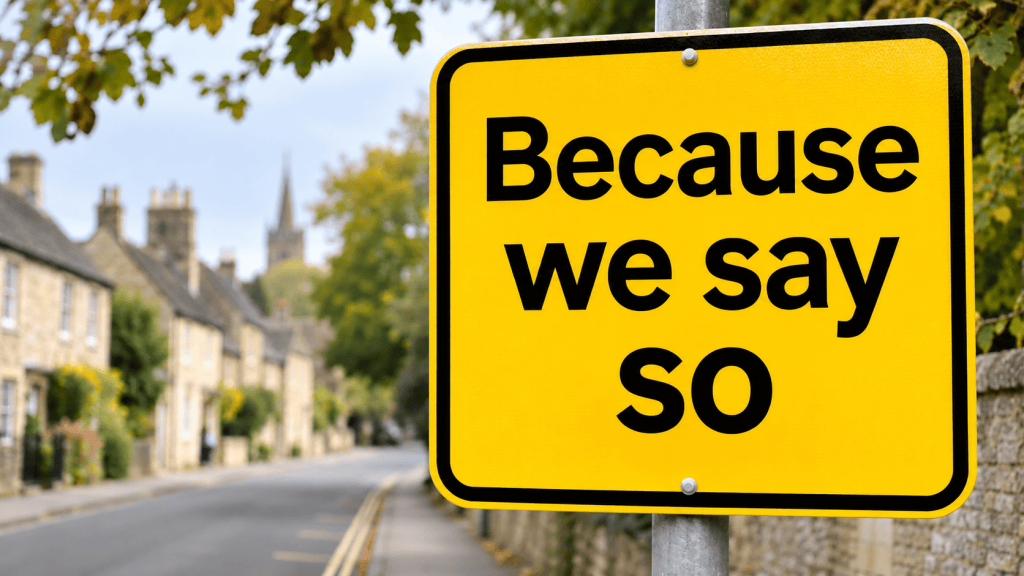
Imagine a parent who wants to control where their adult children are going, how they’re getting there, what they’re eating and drinking, how they’re spending their money and what they’re saying to other people.
A parent who is constantly tinkering with what constitutes acceptable behaviour, fines their kids for stepping out of line and treats any questioning of their authority with a sort of irritated incredulity – if they listen at all. A parent who believes that almost no aspect of their grown-up kids’ lives is off-limits for them to interfere in, all with the justification: ‘It’s for your own good.’
If a parent behaved like this, at best there’d be calls to social services, at worst they’d be lucky to see their kids again. Yet when the parent is the state and we are its subjects, the same behaviour is, apparently, not just OK but a Thoroughly Good Thing.
Don’t believe me? Nip along to your next council meeting and see how they’re planning to control the way you get around, how they want to influence what you eat at home, where you take your holidays, the clothes you buy and even what sort of drinks you should be allowed to have. We’ve reached the point where local authorities are encouraging restaurants to remove salt from tables and government is demanding vegetables are cooked without it. You can still have some, of course, but you may have to ask for it.
The state – at national and local level – now believes it’s fine to ‘nudge’ you to behave differently, to make your existing choices less convenient and, ideally, remove some of those choices altogether.
How did we get here?
What’s a good parent’s job?
The job of a good parent is, ultimately, to make themselves redundant. Not as someone who loves and cares and who’s there when they’re needed, but as someone who needs constantly to direct and control their kids’ lives.
A good parent teaches their children how to assess risk, exercise judgement, make decisions and deal with the consequences. They know their kids will occasionally get things spectacularly wrong – and, at the same time, recognise that getting things wrong is an essential part of learning how to get things right.
What you don’t do is attempt to eliminate every conceivable risk by progressively removing children’s ability to take decisions and making their world ever smaller, greyer and more proscribed.
Why, then, do those in authority (that phrase is telling enough on its own) imagine adults should be treated like this?
The psychology of control
One of the characteristics of a controlling relationship is that the person exercising control defines what is reasonable behaviour. They also reserve the right to change that definition whenever they like – and with it the consequences for transgression.
The person being controlled gradually learns that exercising independent judgement carries a risk and a cost. It’s easier, safer and a lot less exhausting simply to comply. Sound familiar?
Psychologists talk about autonomy as one of our fundamental psychological needs. Alongside competence and relatedness, it’s central to self-determination. We need to feel that we have some agency in and over our own lives. Yet look at how much of our interaction with the modern state is all about securing compliance rather than developing competence.
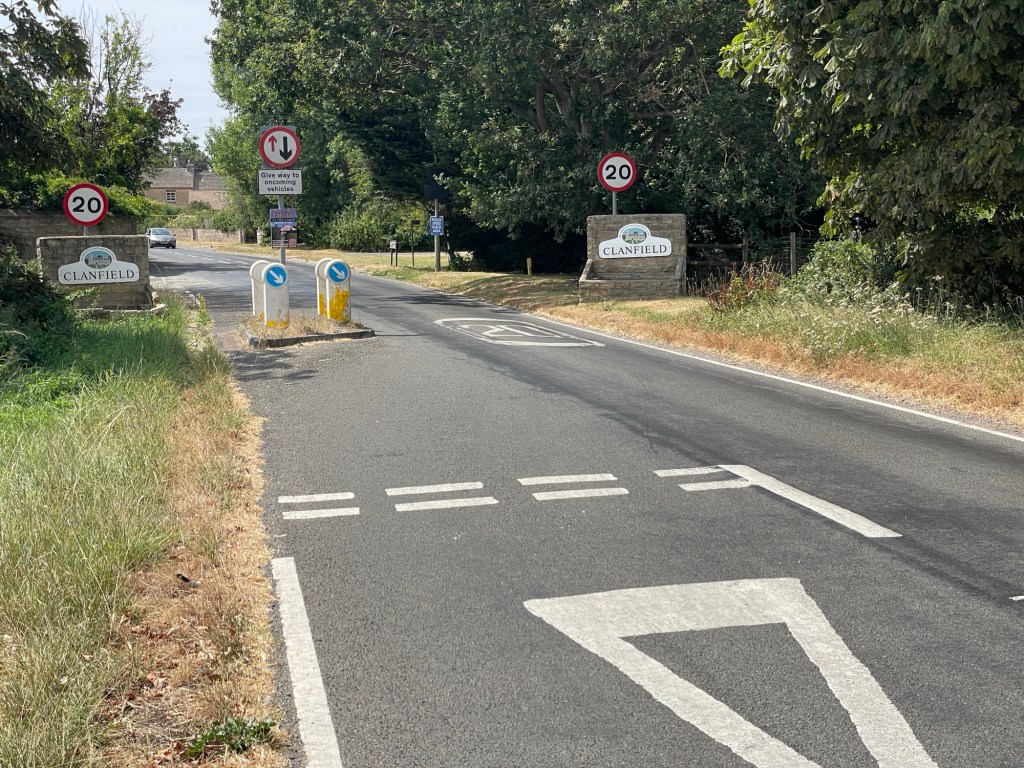
Take driving. We could invest in developing people’s ability to observe, anticipate, assess risk and make good decisions. Or we could keep lowering speed limits even on straight, clear roads, demand people drive to them under the threat of ever higher fines and monitor them with ever more intrusive cameras.
One allows the individual to develop. The other regulates them into little more than a compliance monkey.
It’s for your own good
The difficulty with parentalism like this is that, once you’ve accepted the principle that the state should protect people from themselves, there’s no particularly logical point where it should stop and no area that’s off limits.
Almost everything we do carries some degree of risk. Eating cheese, riding a bicycle, drinking wine, climbing a mountain, driving a car or spending a Saturday afternoon up a ladder clearing the gutters.
Of course, none of this means we shouldn’t have laws. We have a perfectly reasonable expectation that the state will protect us from the actions of others. But protecting me from someone else and protecting me from myself are fundamentally different.
The parent who never apologises
There’s another characteristic of unhealthy controlling relationships: the asymmetry of accountability and consequence.
Imagine a parent who demands absolute compliance with their instructions but accepts little responsibility when those instructions turn out to be wrong.
If you make a mistake, you’re punished and fined or your liberty is removed. If they make a mistake, it’s unfortunate, lessons will be learned and, incidentally, they’ll need a little more of your money to put things right.
And bear in mind we’re talking about a state that believes it can influence the weather yet is unable to put a bus stop in a market town in the right place.
In a healthy relationship, authority comes with responsibility. The greater the authority, the greater the responsibility. Yet that principle doesn’t seem to apply to people who want ever more power to exercise over the minutiae of the lives of millions of others. Close a high street to cars and watch its businesses fail, their owners lose their livelihoods? The councillors and officers who took the decision – often against the weight of opposing consultation responses – skip away into the sunset, remuneration, final salary pensions and allowances intact.
From human beings to human taxable units
The political scientist James C. Scott explored something particularly relevant in his book Seeing Like a State. Governments need to simplify the extraordinary complexity of human life to make it administratively manageable.
Sadly, most politicians and bureaucrats now mistake that simplification for reality. We become nothing more than units of economic productivity, sources of tax revenue, risk profiles and compliance statistics. Our individual circumstances, preferences, abilities and aspirations don’t fit on the spreadsheet or in the model and are just too inconvenient to bother with.
The temptation, now, is to make human beings fit the system rather than make the system work for the people in it and affected by it.
Anyone who’s spent any time working with large organisations will recognise the phenomenon. The process was originally designed to help the person. Soon, the person finds themselves simply subject to the process.
And technology now makes it possible to do this on a scale that would once have been unimaginable.
Who are the grown-ups?
There’s no great international conspiracy at the heart of the growth of state control (remember – they can’t even put a bus stop in the right place). The problem is that politicians and bureaucrats can’t leave anything alone.
The perpetual cry of the politician looking to make a name (and find me another sort – I’ll wait) is ‘Something must be done!’
The Politician’s Syllogism then comes into play:
Something must be done! – X is something – We must do X now!
Politicians are rewarded for being seen to Do Something, no matter how daft, pointless, expensive, disastrous or likely to fail it is. Government departments can justify their existence by finding new responsibilities. Technology makes monitoring and enforcement increasingly cheap and practical. And every crisis presents an opportunity to push the remit a little further. Crash on that A road? Instant howls to ‘LoWeR tHE LiMITs aND PuT uP CAmeRAz!’
Where, though, is the corresponding incentive to leave people alone?
When did we last hear a politician proudly announce that, having examined a problem, they’d concluded that the people closest to it were perfectly capable of sorting it out themselves?
Perhaps we need to apply some of the principles of healthy human relationships to government. Respect for autonomy. Proportionate intervention. Mutual accountability. Trust. An acceptance that other people may make perfectly legitimate choices that we wouldn’t make ourselves.
And, above all, the humility to recognise that having power over someone doesn’t necessarily mean you know what’s best for them.
Perhaps it’s time we reminded the people who govern us that we’re not their children – and they’re being bloody lousy parents.



Leave a Reply