(or How to Drive by Numbers)
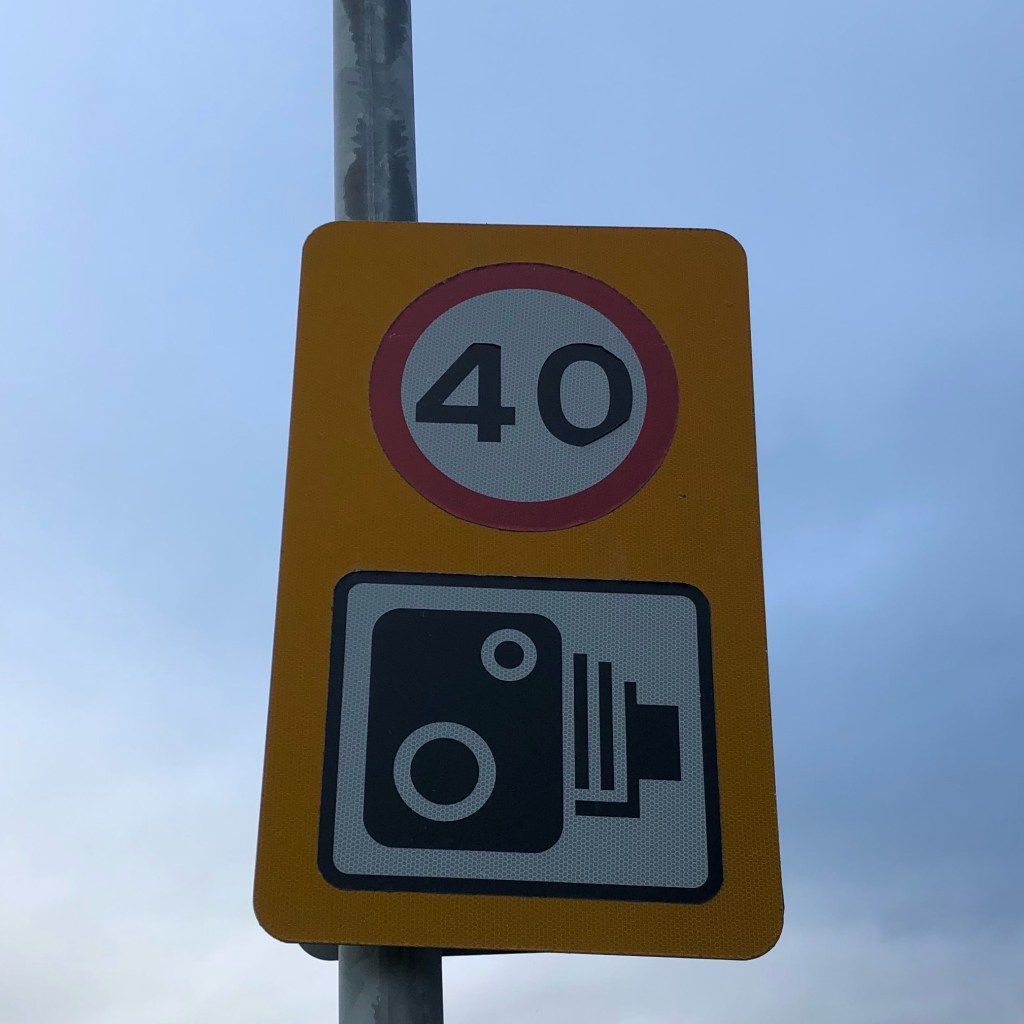
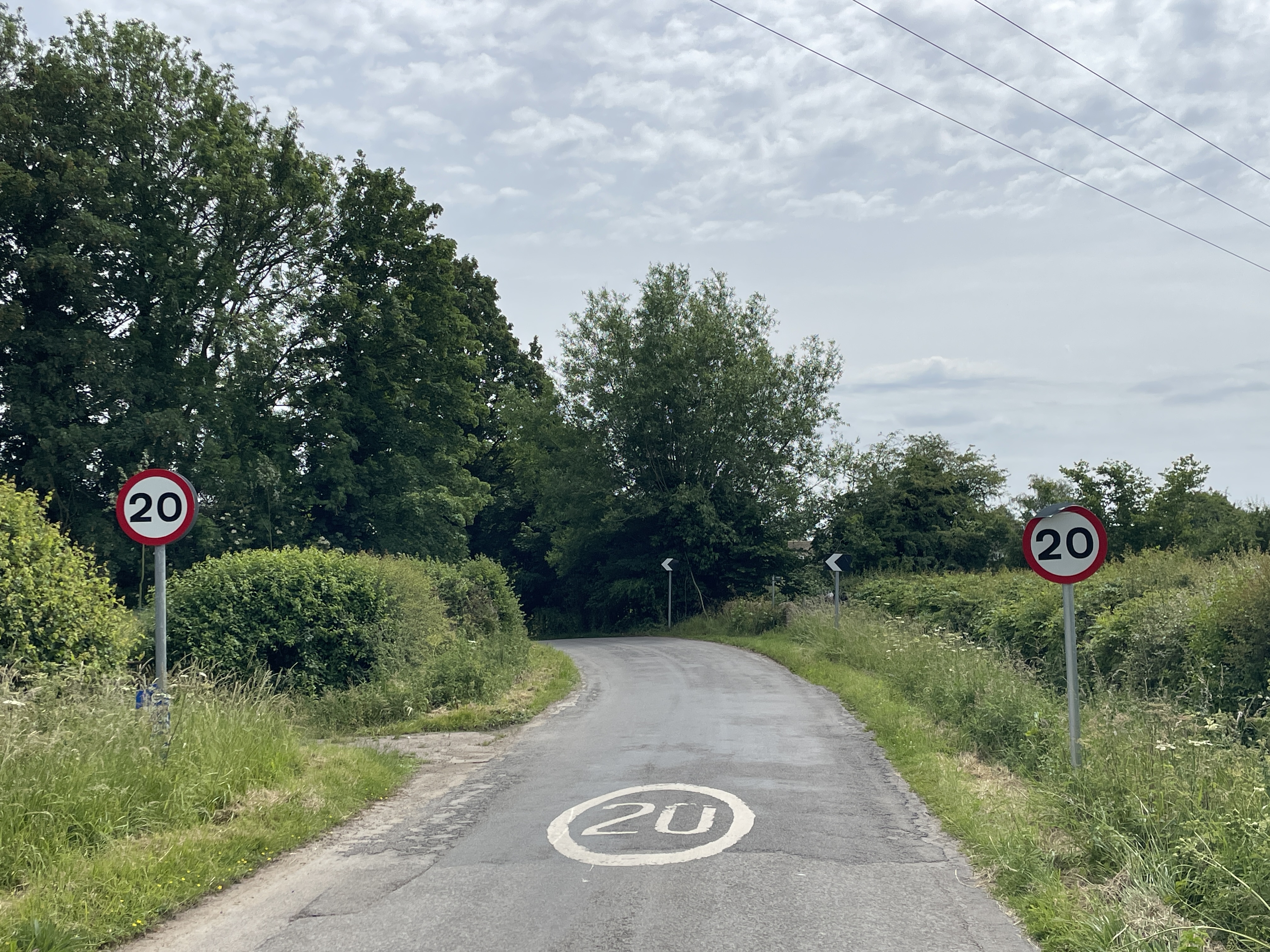
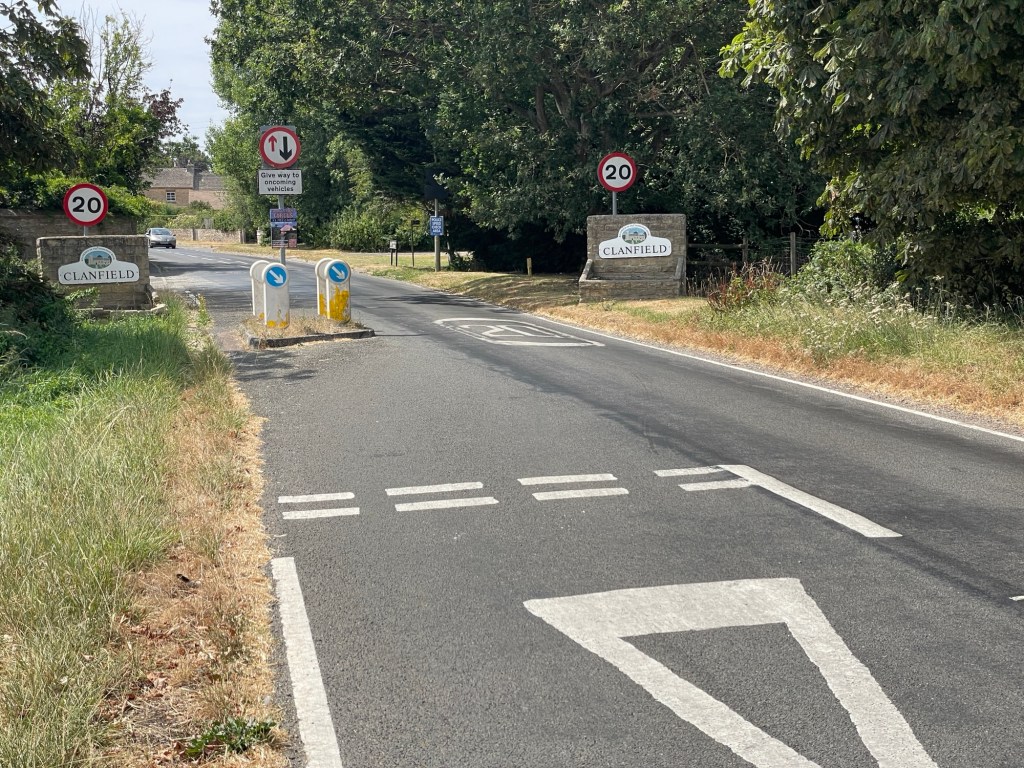
Since Oxfordshire County Council – and it is very far from alone – went Twentytastic and clambered aboard the speed-limited Vision Zero bandwagon, a new type of driver has appeared; the Limit Limpet.
You’ll have followed one. The Limpet drives precisely, invariably and utterly compliantly to the posted number. Approaching a 20, they brake hard to shed exactly the right amount of speed at exactly the right moment, as though the sign were a tripwire. Leaving it, they accelerate to 40 the instant the new sign passes their left ear, and not a moment before. The speedometer and the sign must agree. That is the whole of the law.
And nothing else matters. Not the school gate. Not the mud on the road after the harvest. Not the horse box coming the other way, or the low winter sun sitting exactly where a pedestrian is about to step off the kerb. The Limpet will barrel into a blind bend at the permitted speed with total serenity, and pull out of a junction without really looking, because the number on the dashboard matches the number on the stick and so all is well.
It’s driving by numbers. A bad facsimile of the real thing, designed for children rather than adults, and increasingly mandatory for everybody.
What we’ve thrown away
There used to be a principle behind the setting of speed limits, and it was rather a good one. You measured the road. You watched what drivers actually did on it in free-flowing conditions, and you set the limit at or near the 85th percentile – the speed at or below which 85 out of 100 of them chose to travel.
That sounds crude. It isn’t. It’s one of the most quietly sophisticated instruments in the whole of transport policy, because of what it’s actually measuring.
It isn’t measuring recklessness. It’s aggregating the judgement of thousands of individual drivers, each of whom is responding to changing information that no committee could ever possess: the camber, the sightlines, the surface, the light, the width, the feel of the thing. Each driver knows a tiny fragment. The 85th percentile pools the fragments. What comes out the other side is a number nobody designed and nobody could have calculated, but which encodes an enormous quantity of real, local, situated knowledge about a specific piece of tarmac.
Hayek called this the knowledge of the particular circumstances of time and place. His point, made about prices in 1945, was that this kind of knowledge is dispersed by its nature. It exists in fragments, held by thousands of people, and it cannot be gathered up and handed to a central authority, because in the act of gathering it you destroy the thing that made it valuable. The planner does not simply lack the information. The planner cannot have it.
But that’s precisely what officials and politicians have now decided to do with speed limits.
We have taken a distributed, self-correcting, locally-informed signal and replaced it with a number chosen by somebody who has, in all probability, never driven the road in question at seven o’clock on a wet February morning. It is now set behind a desk, in a policy document, by an officer implementing the agenda of an activist cabinet member who has already decided what the answer is. The road no longer speaks. The road is told – and so are the drivers who use it.
The mechanist and the realist
There’s a particular cast of mind at work here, and it’s worth naming, because it isn’t stupidity and it isn’t malice. It’s a philosophy – Mechanism.
The mechanist believes that input equals output. The world – and the people in it – always behave like a physics equation. Feed in a rule, enforce the rule, collect the result. Reduce the number, reduce the harm. It is a beautifully tidy view and it has the great advantage of being administrable, auditable and reportable to a scrutiny committee.
The mechanist, in short, believes the world is complicated.
The realist knows it’s complex. And those two words, which people use interchangeably, describe entirely different kinds of system. A complicated system is a watch: enormously intricate, but knowable, decomposable, and predictable once you understand the parts. A complex system is a junction on a Tuesday afternoon. Adaptive. Interdependent and independent. Unpredictable and unplannable. Full of normal humans reacting to each other in real time rather than following detailed, meticulously planned instructions. You cannot control it. You can only participate in it. The sort of thing that gives most officers and councillors cold sweats.
Take a corner.
The mechanist approaches, looks for the sign, reads 30, checks that the needle says 30, and drives round it at 30. Job done. Compliance achieved. Safety, by definition, delivered.
The realist approaches the same corner and reads the corner. Is it damp? Is there gravel washed onto the apex? Is it dusk, with the sun behind the hedge? Is there a tractor in the field gateway? Can I see through it, or does it tighten? Every one of those variables moves the actual safe speed, and it moves it in both directions. The same corner might genuinely be a 68 on a dry August evening and a 25 in the rain in November.
Nobody, incidentally, is suggesting drivers should be sitting there computing that 35.767mph is the optimal entry speed. That’s the mechanist’s caricature of the alternative. What the realist is doing is reading the road and the situation – the thing humans are actually rather good at, and the thing forty years of driver training has been built around.
The sign can only ever give you one number about one thing – and something that is an output, not an input. The corner is different every time you drive round it.
The number that isn’t the variable
Driving by numbers would at least be defensible if the number were the thing that mattered. Overwhelmingly, it isn’t. Look at how crashes actually happen and you find failures of observation, of anticipation, of judgement and of attention. Somebody didn’t see somebody. Somebody misjudged a gap. Somebody was looking in the wrong place at the wrong moment.
Attention is finite. It is the scarcest resource in the car. And every scrap of it spent policing the speedometer against an external standard that the driver’s own eyes are telling them is wrong is a scrap not spent on the pavement, the mirror, the gateway and the junction. The lower you ratchet the limit, the worse it gets.
And yes, the prigs will tut ‘If you can’t keep to a speed limit you shouldn’t be on the road!’ But this misses the point, as well as being a straw man. Human attention is finite. If you force people to spend it on compliance with limits well below the 85th percentile and that bear no relation to the road characteristics, they can’t spend it on seeing the kid run out, the car pulling out of a space, the horse and rider you could have seen across two hedges but were too busy focusing on matching the number on the dial to the number on the stick.
That’s the sting in the tail. The mechanist reduces the limit to widen the margin of mechanical safety – and in doing so starts eating into the margin of human safety. Compliance crowds out observation. You do not get a safer driver. You get a more obedient one, and those are not the same animal at all.
It is worse still when the limit is set so far below what the road plainly supports that it feels absurd to the person driving it. Force anyone to follow a rule they can see is silly and you don’t get respect for the rule. You get either the Limpet, with a weaving, frustrated queue of potentially dangerous anger overtakes behind him, or the driver who has quietly decided the whole system is nonsense and stops taking any of it seriously.
The road already knows
The tragedy of the Limit Limpet is that they’re not a bad person. They’re doing exactly what they’ve been told, by signs, by campaigns, by enforcement and by fifteen years of messaging that has reduced the entire complex content of safe driving to a single scalar quantity. They are the policy’s finished product. If you tell people for long enough that safety is compliance, you should not be surprised when they comply and stop being safe.
The alternative was never anarchy. It was humility on the part of those in authority – the recognition that the person at the wheel, at that moment, in those conditions, knows something the desk cannot know, and that a limit set from the aggregate of those judgements will fit the road better than one derived from a target, let alone one derived from an ideology.
We had a mechanism for harvesting that knowledge. We’re dismantling it, one review at a time, and replacing it with a number that tells you nothing about the road and everything about the person who chose it.
Look up. The corner is right there in front of you, and it’s telling you exactly what it wants. Nobody needed to put it on a pole.



Leave a Reply