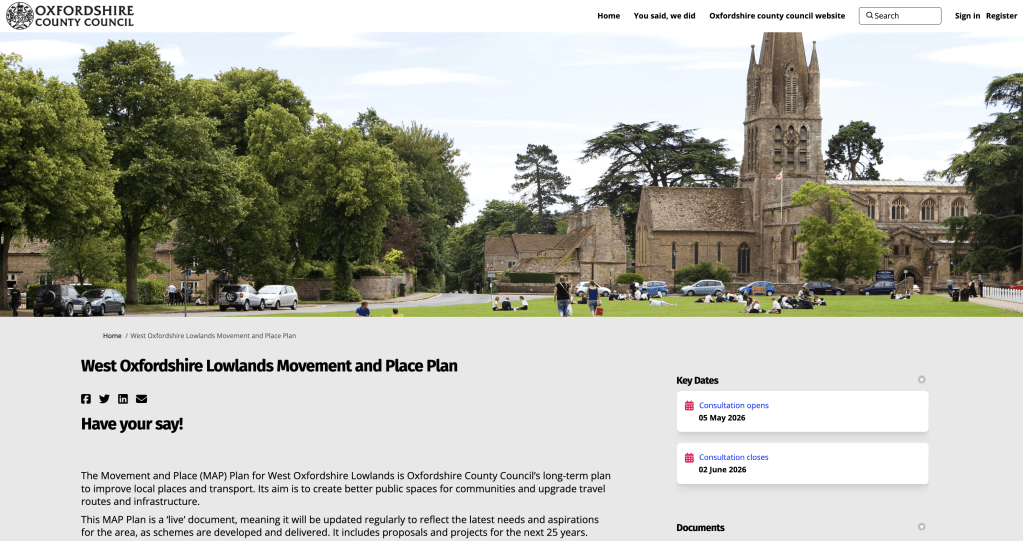
When I’m not writing about watches and time, I run a business that specialises in helping organisations communicate with their customers. It’s an area I’ve worked in for more than 25 years.
Outside some technical or legal writing, I don’t think I’ve ever seen a set of documents so difficult to read – or so potentially disingenuously written. They are presented in such difficult language and are so aggressively leading that many residents will either not be unable to understand them fully or will simply end up agreeing with what’s presented.
I used the same techniques I’d use for a client’s material to evaluate the council’s consultation documents.
Difficult to read
I ran a readability analysis of the consultation survey using the Flesch-Kincaid Reading Ease scale. That’s the standard measure used by the Plain English Campaign and most public sector communications guidance. The results are troubling for a survey aimed at the general public:
● The Vision Statement scores 13.3 – comparable with a commercial legal contract, and classified as ‘Very Confusing’. Academic journal articles typically score in the 20s.
● The Objectives page scores 30.6 – ‘Very Difficult’, postgraduate level.
● The Outcomes page scores 43.4 – ‘Difficult’, A-level reading standard.
● Only the final infrastructure question approaches accessible territory at 52.9 – still harder than the 65+ recommended for public communications.
For context, the main MAP Plan document itself scores 46 – so the consultation summary intended for residents is in places significantly harder to read than the technical document it’s meant to summarise. The average reading level in the UK is around equivalent to a Flesch Kincaid score of 75-85.
Leading questions, structure and language
Many council documents struggle with readability. The real issue here is the way the survey is structured and the way it uses language to obscure meaning.
The structure of the survey itself raises questions about whether it can generate meaningful consultation data. The first three substantive sections ask residents to rate – on a standard agree/disagree scale – a Vision Statement, fifteen objectives, and nine outcomes that have already been drafted and, in the case of the outcomes, ‘agreed by councillors.’ This is not consultation; it is ratification.
Presenting a wall of aspirational language (who could disagree with ‘a healthy, vibrant, inclusive and safe place’?) and asking people to endorse it produces high agreement scores. There is no scope for residents to talk about or express priorities, trade-offs, or resident concerns. This is close to manipulation – one hopes it was unintentional rather than deliberate.
Several specific issues, some which feel like deliberate manipulation, make this worse:
• The Vision Statement’s agree/disagree question follows three paragraphs of entirely positive framing, with no indication of what the plan would require residents to give up or change.
• The Outcomes page tells respondents that the outcomes were ‘agreed by councillors’ before asking for their views – a legitimising signal that creates social pressure to agree.
• Technical terms including ‘Vision Zero’, ‘transport user hierarchy’, ‘Strategic Active Travel Network’, and ‘Air Quality Management Areas’ appear in questions without definition.
• The Objectives page asks respondents to rate fifteen items in a single matrix question – a format well-documented in survey research to produce ‘straightlining’, where fatigued respondents select the same answer for every row.
• The survey’s one genuinely open question – asking residents what infrastructure improvement matters most to them – appears last, by which point many people will simply have given up – or be too fatigued to bother.
What should the council do?
A set of consultation material that many residents cannot read, and that is structured to generate agreement rather than surface genuine opinion, does not meet the standards of meaningful public engagement. The data it produces will not reliably reflect what West Oxfordshire residents actually think.
Given this, and the problems with the survey and supporting documentation, OCC should take the current set of documents down, redraft them using Clear English principles (targeting a Flesch score of 60+), and restructure them to prioritise non-leading, open questions and genuine trade-off choices. As it stands, the exercise is little more than a rubber stamp dressed up as consultation.




Leave a Reply