You’ll probably live until you’re, near as dammit, 80. 80 birthdays. 80 Christmases, 80 summer holidays. That’s 29,200 days. Not long, is it? And, apart from hoping for decent genetics, laying off the pies and going for the odd run, there’s not a lot you can do to significantly extend it.
Yet we seem so blasé about wasting those days. The expression “It’s a bit of a waste of time” is one of mild annoyance, not a howling at the sun that you’ve lost moments you can never get back.
Councils treat your time as valueless
Yet your local council treats your finite life as though it has no significance or value. To be fair, they’re far from the only ones; treating people’s time as valueless is a speciality of large organisations. But the councillors who – increasingly – tell you how you can and can’t travel haven’t seem not to think about how the impact of their decisions forces you to waste your life. Your 29,200 days are, apparently, of no interest to them.
I can drive the 12 miles from my home to my office in a little over 20 minutes. Cycling takes an hour and fifteen. The bus journey takes two hours. And those are the times that councils often quote as they tell me to leave my car at home.
Travel further and the time wasted grows. Getting to a client just the other side of Oxford means 34 minutes in the car, 2 hours 35 on a bus – half an hour of which is walking to and from three different stops – and just under two hours on a bike. The bus time is somewhat academic as to arrive by 0830 when I’d need to start work I’d need to leave the previous evening.
The hidden time costs in transport
But there are also hidden time costs to every mode. There’s congestion (often now deliberately caused by the same councils who scold you for driving) in a car. But the time-wastes in other modes are hard-wired in.
Look at public transport, perhaps the most time-wasting mode of all. First, I need to know when the bus or train is running, so I need time to research the journey. Then more time to walk to the bus stop or station (that’s fine if you’ve lived somewhere long enough to know where they are, it’s hard to find out if you haven’t) and then time to wait until it arrives. The whole process is slow and inefficient. That’s before you even start looking at the cost. That too is a time factor – I need to work a certain number of hours to be able to afford the heavy cost of the season ticket so I can go to work.
Should transport be practical or ideological?
Yet councillors will earnestly demand that you take the bus or cycle, not because those modes are the fastest and most efficient but because they suit a certain ideology. They’ll even hamstring more efficient modes like cars and motorcycles to make sure you do.
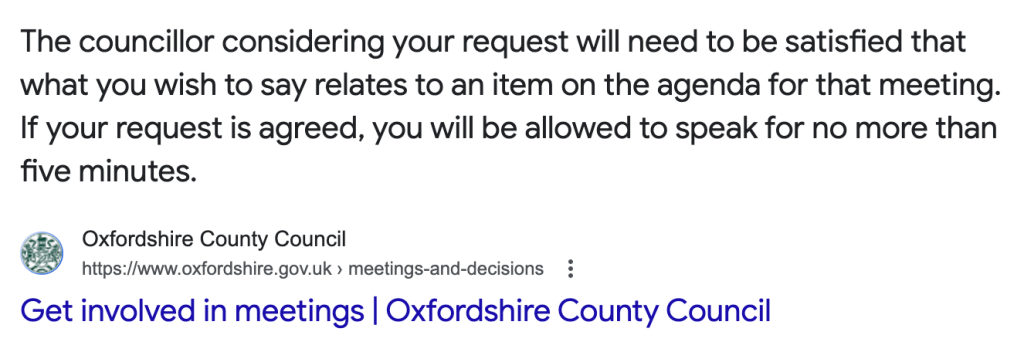
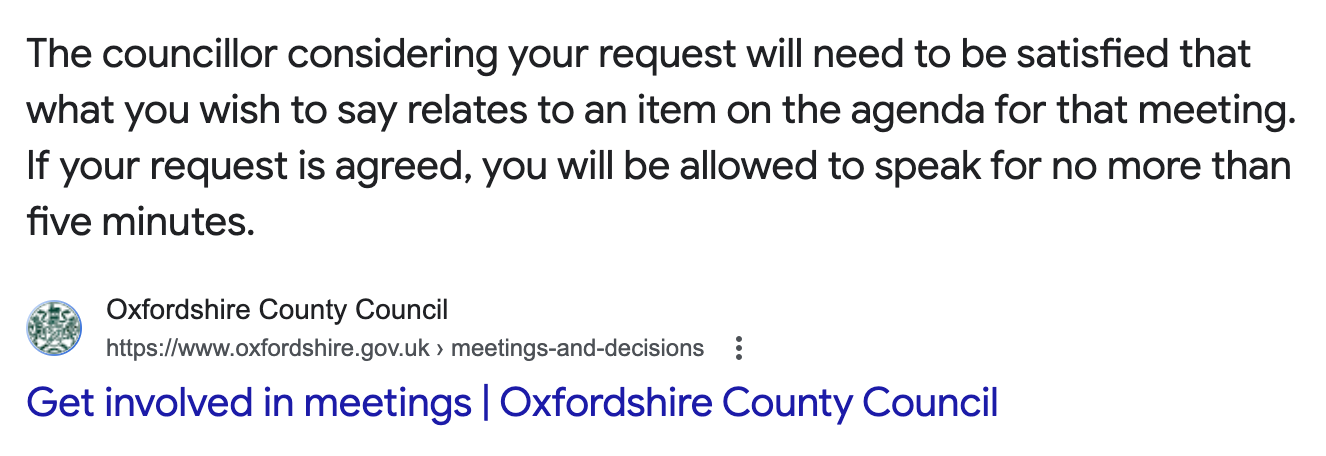
Contrast this cavalier attitude to your time with the way that councillors force you to value theirs. Even the tone of their language makes it clear that their time is valuable; yours is not.
Transport needs to be practical not ideological. Its job is to move people and things, not to demonstrate a local authority’s or a group of councillors’ ideological purity. Instead of being ideological, we need to factor the value of peoples’ time into the equation. It should simply not be acceptable to waste peoples lives by forcing them to choose ineffective ways of getting around.
If the alternatives to the car are so great, why don’t people choose them freely?
After all, if the alternatives to the car and motorcycle are so great, why are people not freely choosing them already? If people need to be forced or nudged to use a mode, either through handicapping their mode of choice or compulsion, it rather implies that the other modes offer a poorer choice.
Three principles for practical transport
So perhaps we need some principles to make sure local authorities start treating people’s time as though it has a value. I’m proposing these three as a starter:
Principles
- Ordinary people’s time is finite and has value. They should not be forced to waste it
- Transport policy should enable people to freely choose a mode that makes best use of their time
- The person making the journey is the best person to choose the mode that suits the journey
To deliberately push people into using modes that waste their time benefits no-one.




 MMC Musings
Leave a comment